

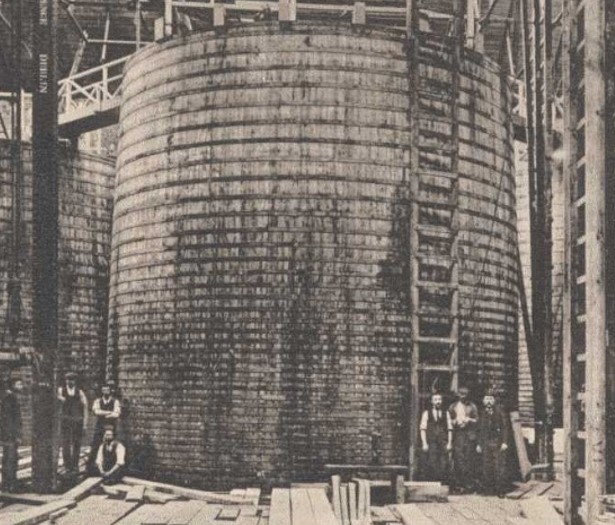
Until the middle of the 19th century wood was the main material of construction for most brewery vessels, including the casks used to transport beer to public houses. The National Brewery Centre contains many examples of the coopers’ skills as well as the tools they used.
The main exception to wood was “the copper”- the vessel used to boil sweet wort with hops in the Brewhouse. Until the end of the 19th century, this was generally an open vessel set above a coal fire.
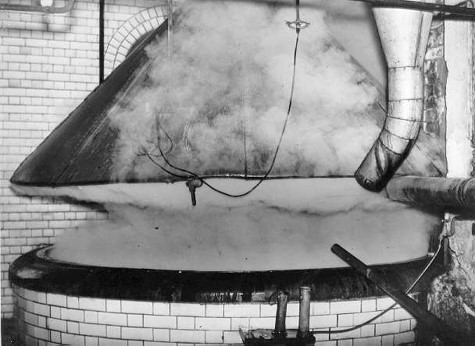
During the 20th century the design of coppers changed dramatically – they became enclosed and various forms of internal steam-heated calandria were used to improve boiling efficiencies.
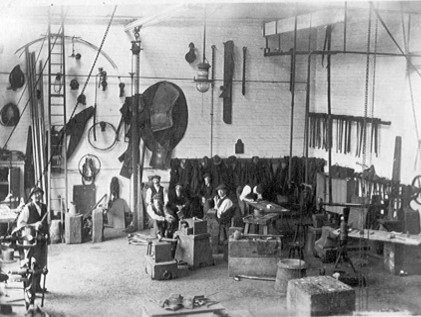
The archives contain many photos, drawings and plans for brewery coppers (and other vessels) from the last century, as well as photos of brewery workshops and coppersmiths.
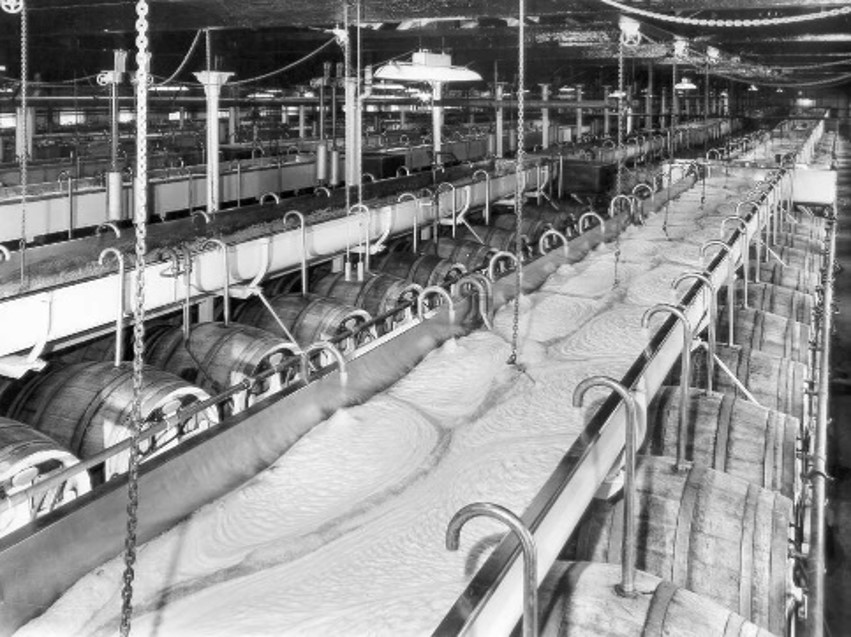
The design of fermenting vessels also changed significantly during the last century – from fermentation in (wooden) casks (typified by the Burton Union System), via open / enclosed squares (wooden or metal) to stainless steel cylindroconical vessels.
The archives contain many photos, diagrams and books showing fermenting rooms and vessels, as well as audio tapes of the men who worked in them.
Various forms of packaging technology – in particular the development of kegs and keg racking equipment, bottling and canning line are also illustrated and explained, both within the archives and at the National Brewery Centre.
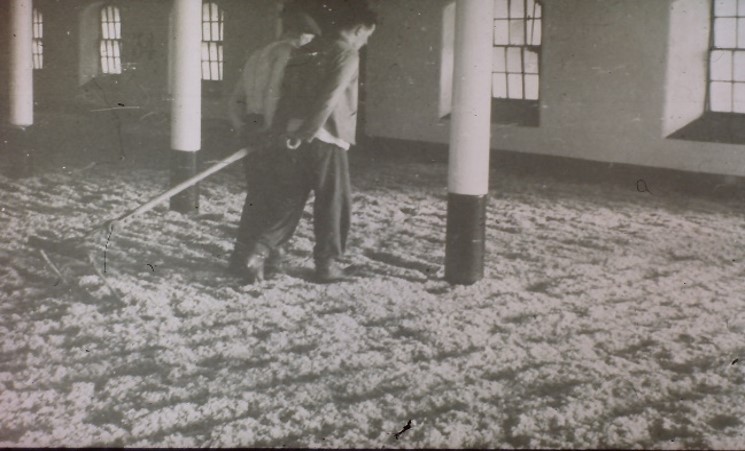
Many of Burton’s brewing companies owned and operated maltings, and so were keen to apply the many technical developments made in the 20th century, aimed at reducing the labour intensity and duration of the malting process.
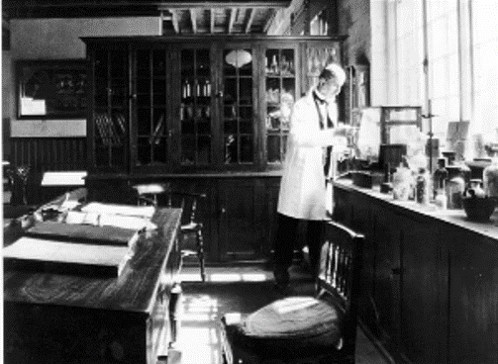
Towards the end of the 19th century, the pioneering work of Pasteur and E. C. Hansen into the nature of yeast, the causes of beer spoilage, and the importance of hygiene in breweries, led to the development of brewery laboratories and routine checks on the quality of beer and the cleanliness of vessels.
The laboratories also checked brewery water supplies, barley, malt and hops on a regular basis for a range of components deemed critical to beer quality and safety. The archives contain examples of laboratory notebooks maintained by some of the eminent brewing scientists who worked in Burton in the late Victorian era.