First World War
The outbreak of the First World War brought about many changes to life on the home front, including a long-lasting impact on the serving of alcoholic beverages. However, following the start of the war in August 1914, dramatic changes would begin to affect breweries, pubs and customers across Britain.
Among the long-reaching powers granted to the government by the Defence of the Realm Act, was strict new legislation regarding the selling and consuming of alcohol. It was at this time that the Government also took state control of the drinks industry in the Carlisle, Enfield Lock and Cromarty Firth areas of Britain in order to protect the production of munitions.
The outbreak of the First World War brought about an increasing demand for men to join the army. In the early months of the war, the British Army was of negligible size and desperately needed immediate reinforcement.
Breweries recognised that men who worked for them would begin to leave in order to join the army. Many looked to women to fill the gap, particularly in packaging areas. In addition, more local brewers began the process of combining their individual delivery staff into a collective pool for beer deliveries.
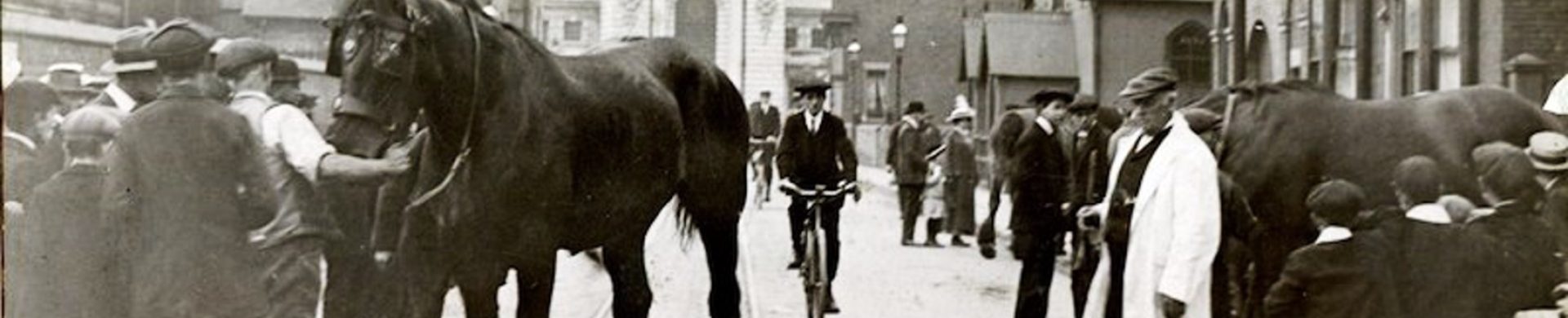
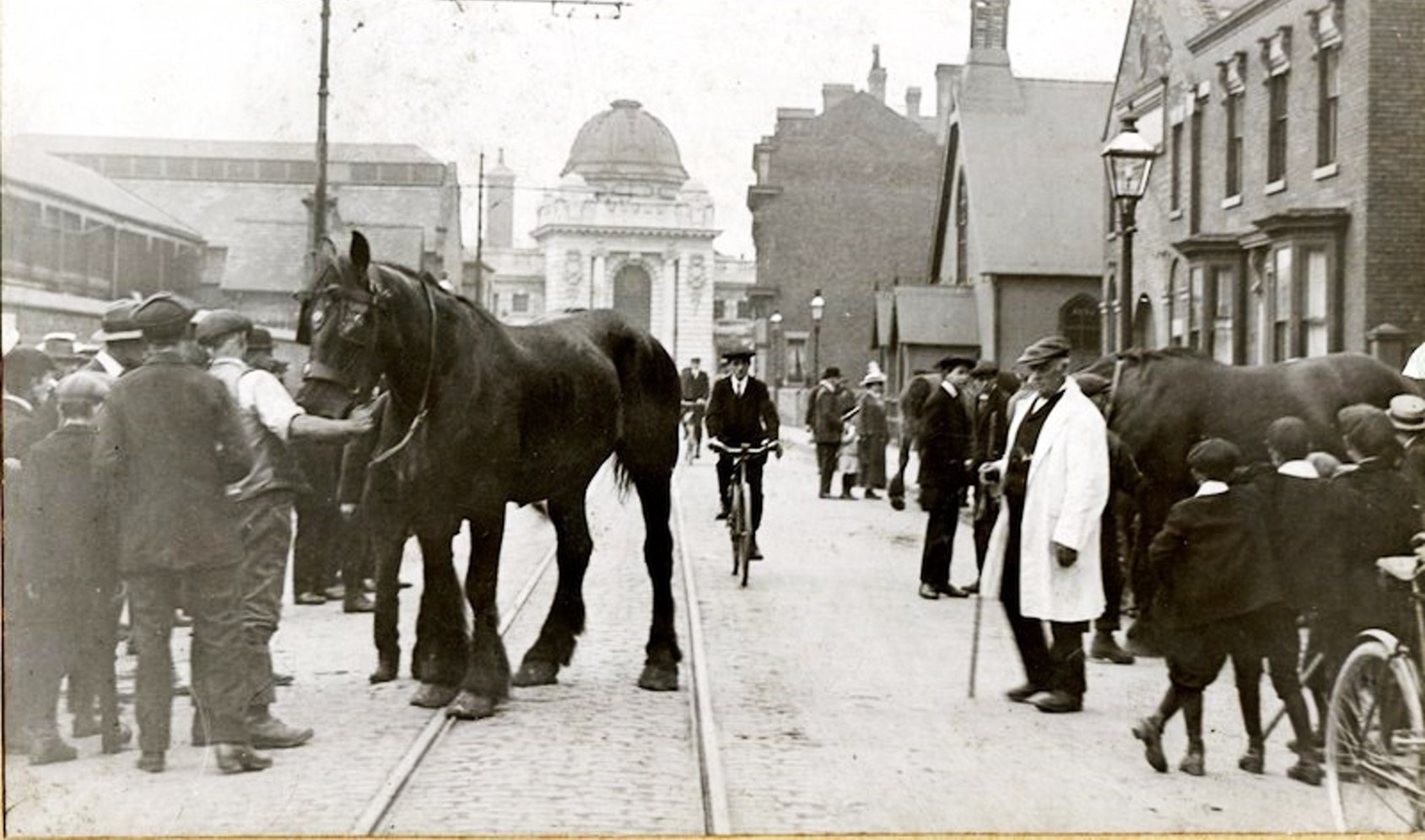
It was not only men that were required at the front, the Government also requisitioned many horses from brewers’ stables, some to be used as cavalry horses and the heavy horses to pull artillery and munitions on the battlefields.
To celebrate the Centenary of the end of World War 1, the NBC ran a project titled “Peace & Legacy” – Burton Recovers. The two-minute video can be viewed at https://www.youtube.com/channel/UC1V_2jLB3srXg8Lb158JLHQ
Second World War
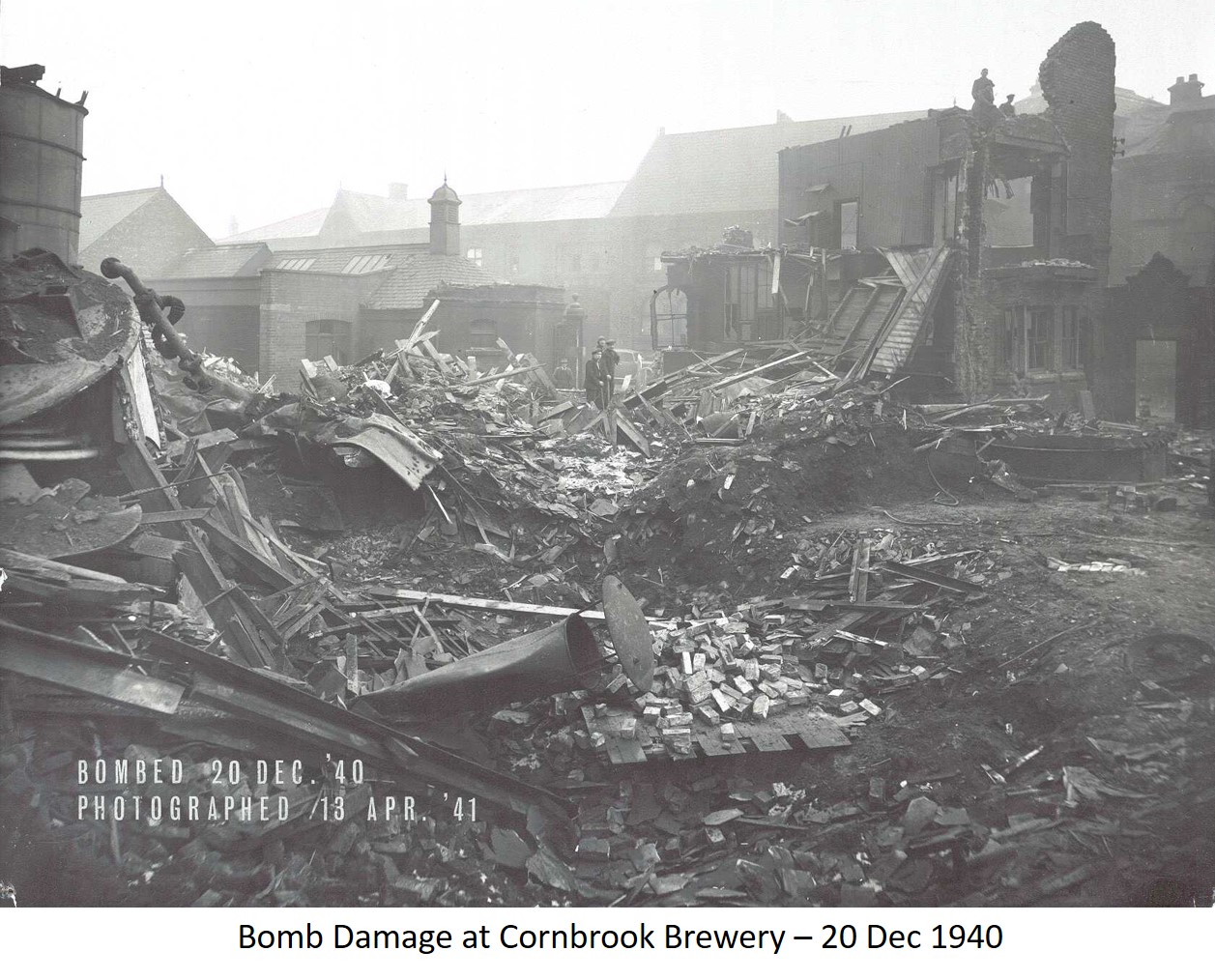
Beer was not rationed at an individual level during the Second World War, but there were limits on the amount that could be produced, which was set at the immediately pre-war level, and gradually increased. Prices rose drastically, mostly because of increased taxation, but demand stayed high.
Some breweries suffered bomb damage and many more pubs suffered the same fate, particularly in London where the many bombing raids and flying bombs destroyed not only the pubs but major areas of London itself. A recent project on Charrington’s pubs revealed that 54 were damaged by enemy action of which 6 were rebuilt but sadly the rest were demolished.
Brewery fire-fighting teams were always on call to help with the effects of air raids in their areas.
Volume and Strength Changes
During the First World War UK production between 1914 and 1918 dropped from 37.6 million barrels at an average gravity of 1052.8 to 19.1 million barrels at an average gravity of 1039.8 and post war gravities settled around 20% lower than their pre-war level.
Conversely during World War Two, production between 1939 and 1945 increased from 25.5 to 32.7 million barrels but the beer again became weaker dropping from an average gravity of 1040.9 down to 1034.5.
Remembrance
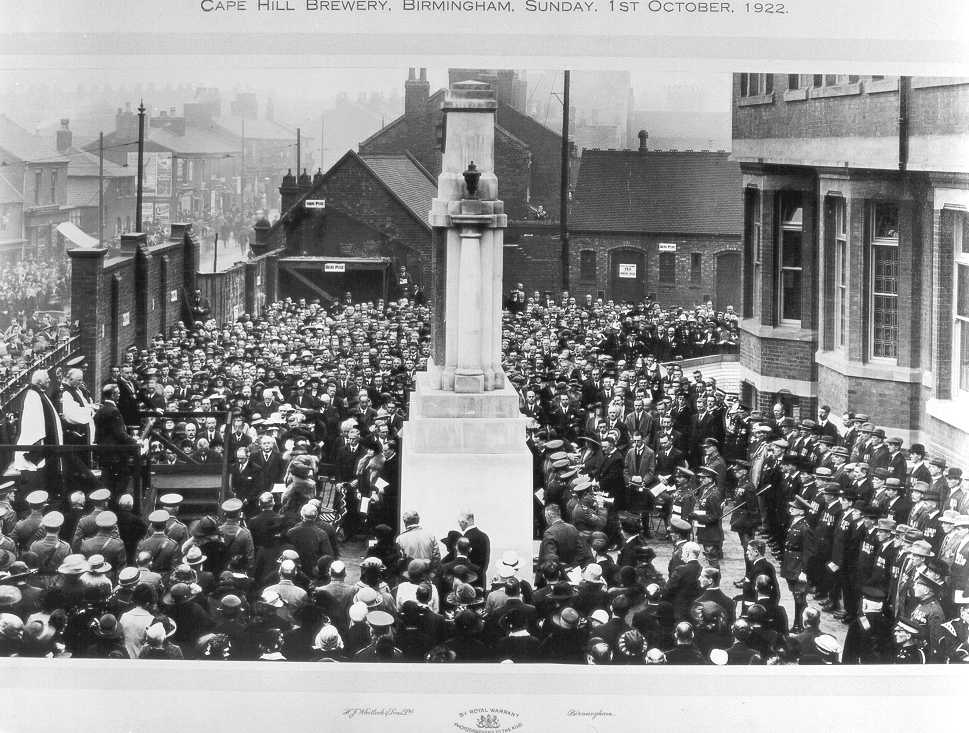
Most breweries erected a war memorial to remember their staff who were lost during the World Wars. Pictured is the unveiling of Cape Hill Brewery war memorial at Smethwick, Birmingham on 1st October 1922.
Read more wartime beer stories