
Barley
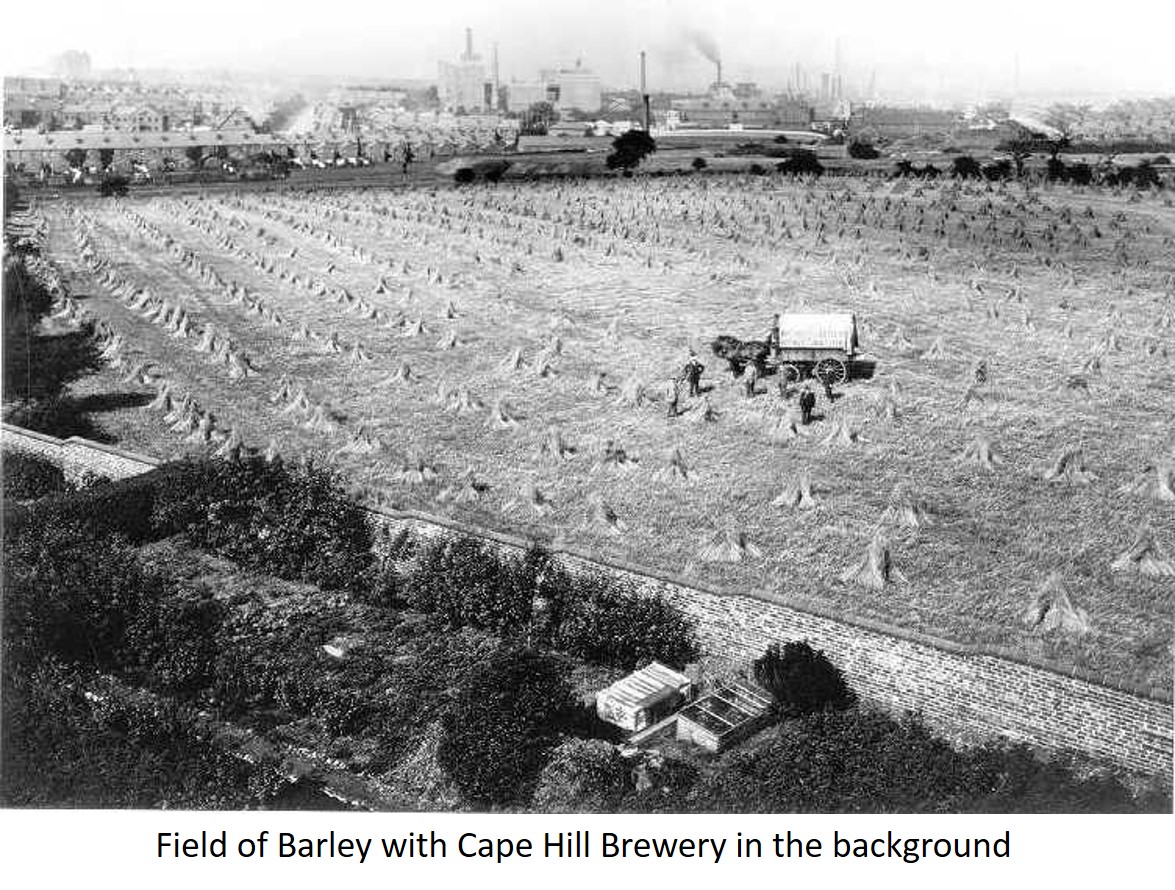
Barley is the fourth most important cereal crop in the world, grown in more than 100 countries and used for animal feed, human food and the production of alcohol. The UK is a major producer of barley and its malting barley has an international reputation for quality and a ready market in local distillers and brewers.
Barley makes for one of the best brewing grains for many reasons:
- in its pale form it has a very neutral character, which allows the brewers to have more control over their final product
- it has the best combination of enzymes and starch concentrations, which allows for greater utilisation and extract
- its husk also makes up the 3rd reason: easier draining of the wort from the grain, which in turn also allows for greater sugar extraction.
Malted barley gives beer its colour, malty sweet flavour, dextrin to give the beer body, protein to form a good head, and perhaps most important, the natural sugars needed for fermentation.
In 1984 the area given over to barley production in the UK was around 2 million hectares but this had dropped to around 1.3 million hectares by 2018, yielding around 8 million tonnes. The annual world harvest of barley in the late 20th century was approximately 140 million tonnes from about 55 million hectares.
Hops
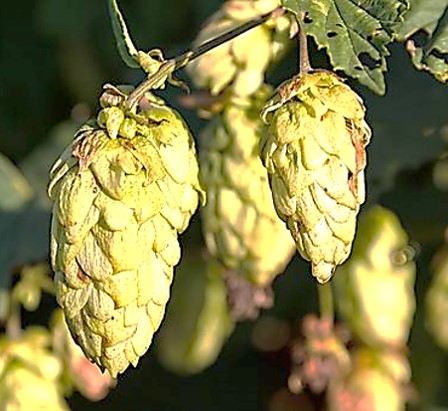
Hops are used in brewing for their bittering properties which counter-balance the sweetness of ales and for their aroma characteristics. Their antibacterial effect over undesirable micro organisms is also a benefit.
There are 34 British hop varieties available today each rated out of 10 for their flavour intensity.
In 2017 the hop output in the UK was 1,400 tonnes. However, the 19th century, was the golden age of the hop industry. Hop acreage continued to increase until 1878 when it reached its peak with 77,000 acres.
Tastes changed and a decline in the demand for porter and a surging demand for lighter beers known as India Pale Ale and Pale Ale became fashionable. There were only 13,000 hectares of land growing hops by 1909 and a renewed import of foreign hops.
The South-East counties of Kent, Suffolk, Surrey and Sussex are where hops were first grown in the UK. They were shortly followed by the West Midlands, including the counties of Herefordshire and Worcestershire and today about half of the British Hop production is grown by West Midlands-based farmers and half in the South East.
When a third of the 1940 hop harvest went up in smoke in a single London air raid, brewers were ordered to reduce their hopping rates by 10 percent. And some of the crop had remained on the bine, because, with the Battle of Britain raging above the hop fields during harvest, many pickers were too frightened to travel to Kent.
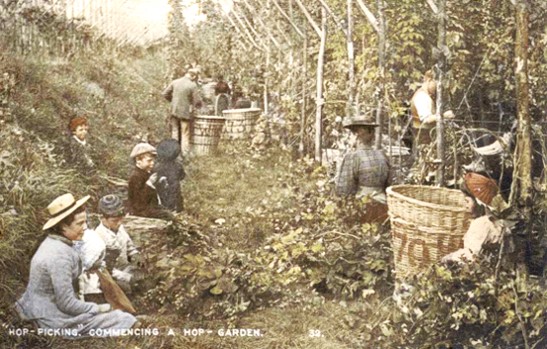
Before mechanisation, many of those picking hops in Kent were from eastern areas of London, often whole families. This provided a break from urban conditions that was spent in the countryside. People also came from Birmingham and other Midlands cities to pick hops in the Malvern area of Worcestershire.