
Transport was fundamental to the brewing industry not only in getting its products to domestic and international markets but also for bringing in raw materials and moving them within the brewery.
Horses
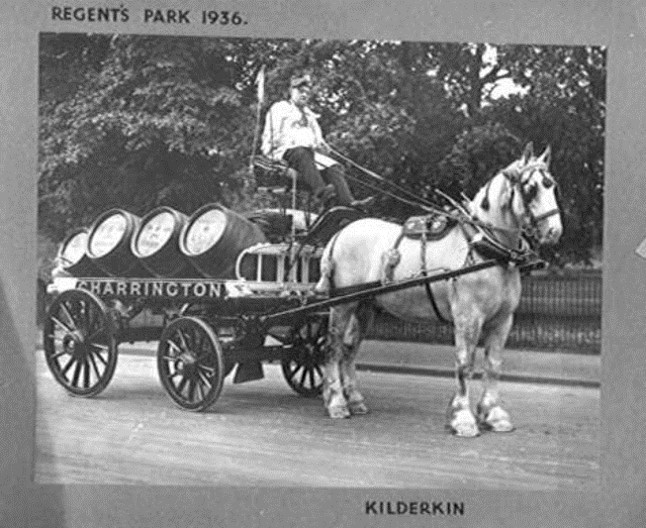
Horses have been used since brewing commenced, apart from a brief interruption during the First World War when horses were diverted for war duties; their primary use was inter-brewery work, moving raw materials barley, malt and hops into the brewing process, the barrels, bottles and cases out of the brewery into storage, and the removal of by products such as spent grains, hops and yeast; horses could also be found working every day to deliver traditionally brewed ales to local inns and hostelries.
Water Transport
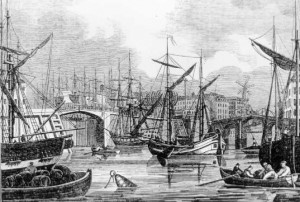
The period between 1760 and 1785 saw the formation of most of Britain’s most important canals, set up by merchants, aristocrats and bankers.
The River Trent connects a number of towns and cities in Britain making it perfect for transporting beer and for reaching the Port of Hull.
Works on the Trent and Mersey canal in 1777 opened new markets for Burton’s beers to Manchester and the Liverpool Docks.
Steam
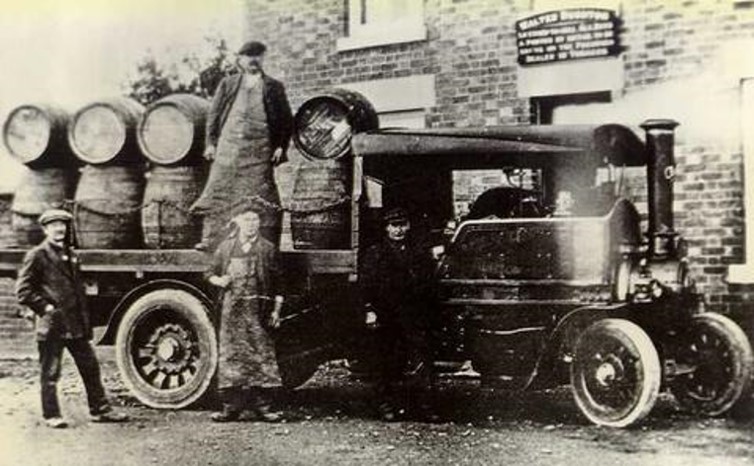
Steam lorries, as opposed to locomotives hauling trailers, were a practical proposition by the 1890s and they proved popular in Britain.
By 1921, steam tractors had demonstrated clear economic advantages over horse power for heavy hauling and short journeys.
Railways
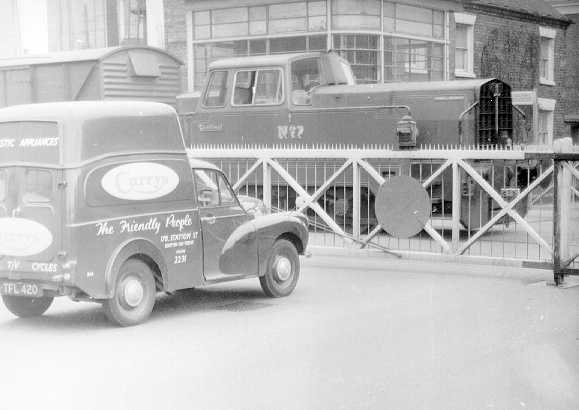
As breweries became bigger, particularly Guinness in Dublin, and Bass, Ratcliff and Gretton in Burton upon Trent, they needed a more efficient way of moving products and raw materials around. The solution was the construction of a railway network serving the entire brewery, in Guinness’s case a narrow-gauge railway.
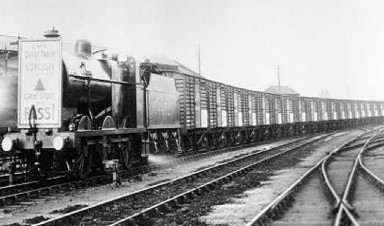
These railways had links to the main railways of the town and these took over from canals in getting products to the ports and also into London where the undercroft of St Pancras station was used to store barrels of beer.
800 columns support the platforms above the undercroft, but a very odd unit of measurement was employed in their original design. The spacing between columns was calculated to match the plans of beer warehouses in Staffordshire, meaning St Pancras’s undercroft was worked out using the width of beer barrels.
In the station’s freight heyday, three dedicated beer trains (and even more in the brewing season) arrived from Burton upon Trent daily, their boozy wares lowered into the undercroft, before being farmed out to thirsty Londoners.
Lorry
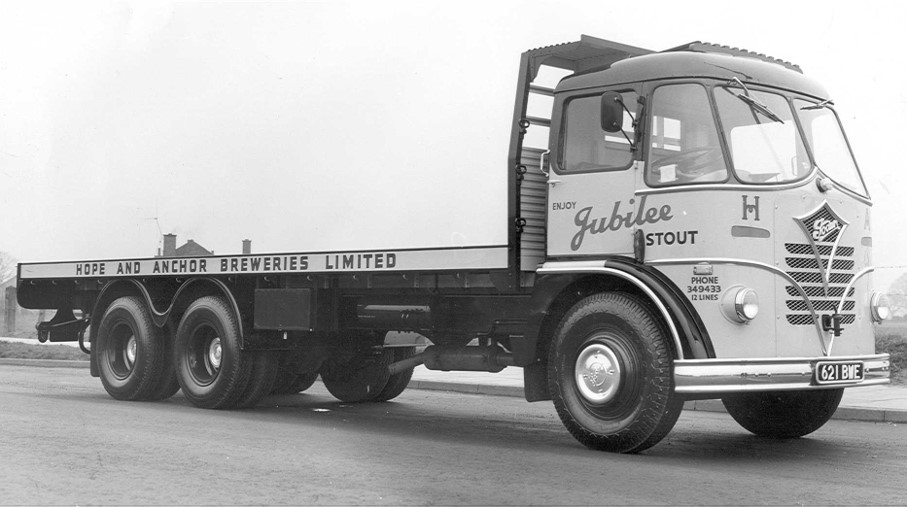
The versatility of design became a great advantage in the brewing business with different style lorries being use for retail deliveries, long-distance transportation from breweries to depot, carriage of bottle and eventually canned products, barley and malt in hoppers and bulk liquids by tankers.
Breweries, particularly Bass, were pioneers in the research & development of transport designing long distance lorries and retail delivery vehicles intended to make it easier for their staff to make deliveries to pubs.