

Many of the individuals involved in the development and commercialisation of the Brewing Industry in the 18th and 19th centuries became household names. This article features a few of these names about which more information can be found in the archives.
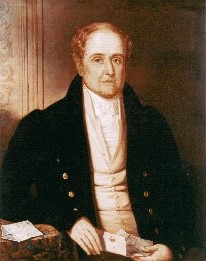
William Bass (1717–1787) formed his brewing company in 1777, and in 1788 was succeeded by his son Michael Thomas.
Michael Thomas Bass (1759–1827), who entered into a partnership with John Ratcliff in 1796 and ran the business until his death 31 years later.
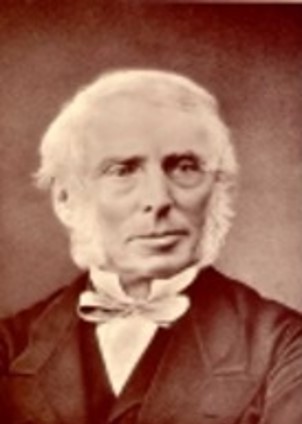
Michael Thomas Bass (1799-1884) succeeded his father in 1827 and in 1835, in partnership with John Gretton and Samuel Ratcliff formed Bass, Ratcliff & Gretton – which over the next 40 years became the largest ale brewer in the world. M T Bass was also MP for Derby from 1848 to 1883, and endowed many public buildings in Burton and Derby.
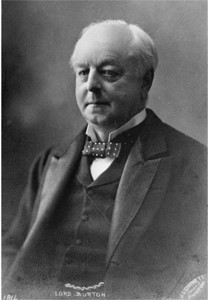
Michael Arthur Bass (1837-1909), the first Lord Burton, succeeded his father as chairman of Bass in 1884 and was the last member of the Bass family to chair the company.
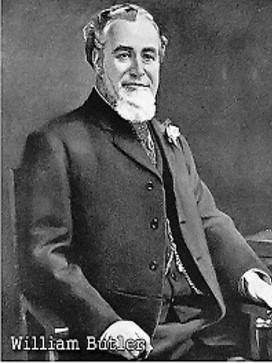
William Butler (1843-1907) built the Crown Brewery in Broad Street, Birmingham in the 1880s and traded as Butler’s Crown Brewery Ltd; In 1898 the two companies merged to form Mitchells & Butlers Ltd (M&B);
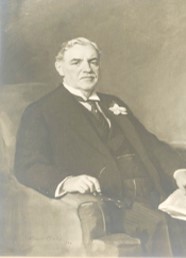
William Waters Butler (1866–1939), the son of William Butler, became deputy chairman of the new firm in 1907 and chairman in 1914, on the death of Henry Mitchell. He became President of the Institute of Brewing in 1906, was active in philanthropic causes, championed reform of the licensed trade in the 1920’s/30’s, and was made a baronet in 1926;
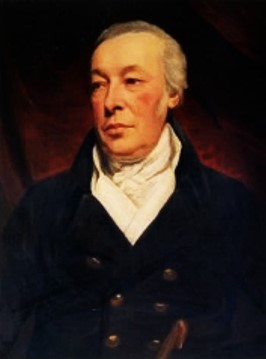
John Charrington (1739-1815) joined the brewing company of Wastfield & Moss in Mile End, London in 1776, 1783 following the retirement of both Wastfield and Moss, John and his brother Henry became joint owners and traded as Charrington & Co., which was to remain the company name for the next 180 years
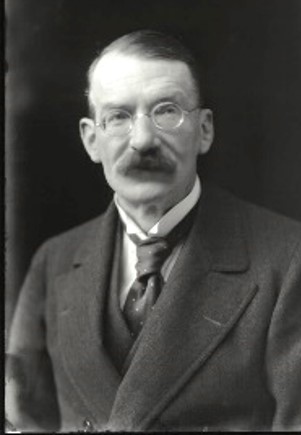
John Gretton (1867-1947), 1st Baron Gretton, CBE,VD,TD, PC,JP, DL, was the third generation of his family to be appointed to the board of Bass, Ratcliff & Gretton, and succeeded Lord Burton as chairman of the company in 1909, a role he held until 1945. He was a long-serving conservative politician and won two gold medals in the 1900 Olympic Games.
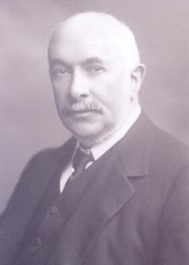
William Posnette Manners – A Burtonian of humble origins, he joined Worthington & Co. as an office boy in 1862, and by the time he was 25 he had become the firm’s cashier and office manager. He was appointed MD of Worthington’s following the death of William Henry Worthington in 1894. On his death in 1915, control of the company passed to his two sons: Arthur & Ernest, and it was Arthur who did the deal with John Gretton in 1926 to merge Worthington with Bass.
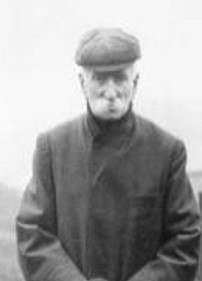
Henry Mitchell (1837–1913) the son of a brewer of the same name, built Crown Brewery in Smethwick, Birmingham in 1866 and in 1878 went on to build Cape Hill Brewery trading as Mitchell & Co;
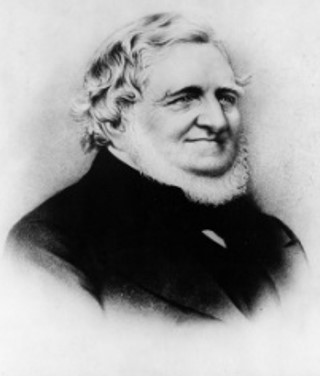
Samuel Ratcliff (1783-1861) was the son of John Ratcliff who was in partnership with Michael Bass from 1796 until his death in 1835. Samuel joined the company as a clerk in 1800, and was admitted as a partner in the newly formed Bass, Ratcliff & Gretton in 1835, a position he held until his untimely death in 1861.
E. P. Taylor (1901-1989) the chairman of Canadian Breweries, joined the Board of Hope & Anchor Breweries in Sheffield in order to promote UK sales of Carling Black Label, his company’s lager, in part by forming a national brewing company. Between 1960 and 67 Taylor initiated and drove an unparalleled series of mergers and acquisitions within the UK brewing industry, which were to change it forever.
H. Alan Walker (1910-1978) was appointed CEO of M&B in 1956 and in 1961 merged M&B with Bass. He became the first Chairman of Bass Charrington Ltd when Bass Mitchells & Butlers merged with Charrington United Breweries in 1967.
William Worthington (1723 – 1800) started as a cooper at Joseph Smith’s brewery in Burton upon Trent and in 1761 he bought the business and founded Worthington & Co.
William H Worthington (1826-1894) great grandson of the founder of the company took over the business and also became the first mayor of Burton upon Trent between 1878 and 1880.
Work is in progress to catalogue the remaining 85% of the archives so this Who’s Who will develop with the initial priorities being Mansfield Breweries and Ind Coope and Allsopp.